
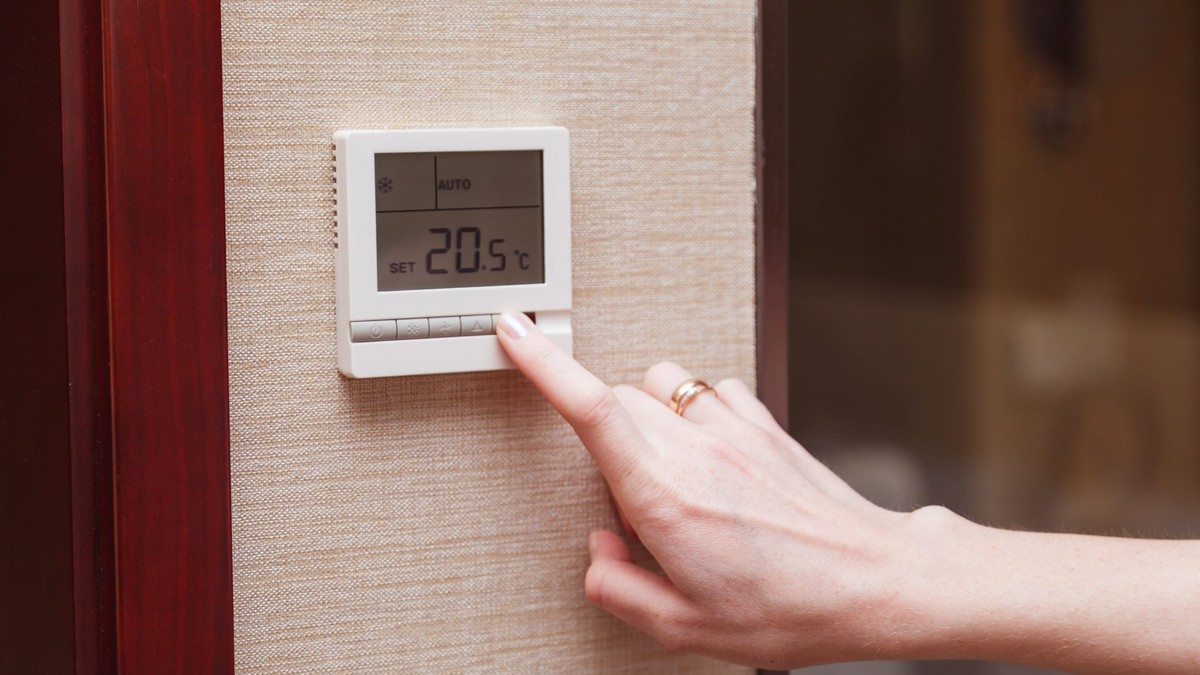
If you’re interested in conserving energy as a way to do your part for the environment by decreasing your carbon debt or as a way to save some money on your monthly utility bill, or both, you have probably learned that there are all sorts of strategies you can try to reduce your reliance on juice provided by the power company. And if you happen to use a central HVAC system that includes a furnace and AC unit, then perhaps you have recently upgraded to more energy-efficient equipment, or even some kind of geo-exchange. But if you’re not using a programmable thermostat, or even if you installed one as part of your energy overhaul but you have yet to program it, you’re not maximizing the eco-friendly and money-saving aspects of your system. So here are just a few of the best practices where your programmable thermostat is concerned.
- Know peak hours. The real benefit of having a programmable thermostat is that you can set it up to raise or lower the temperature (depending on the season) during certain hours of the day (ideally when nobody is in the house) as a way to draw less energy when no one is around to enjoy the effects. And if you want to see the best savings on your electric bill, you need to know when peak hours are (i.e. when the power company charges the most for usage) so that you can try to use less energy. You can call your energy provider to find out when peak hours for your area occur, although as a general rule, you can guess that mornings (say 6-10am) and evenings (perhaps 5-9pm) are the busiest since that’s when families are getting ready for work and school, or later, coming home and making dinner. However, the exact hours may vary by location and season due to daylight.
- Understand settings. Most programmable thermostats come with myriad options for settings these days. Often, your system can store up to six different settings per day, giving you a lot of latitude to have the temperature change on a set schedule, such as when you arise in the morning, when you go to work, when you get home, and when you go to bed, just for example. But you may also be able to add weekly settings so that you enjoy different temperature options on the weekends. When you know how to set your thermostat to revolve around your schedule you should only have to make seasonal adjustments.
- Basic schedule for savings. It is estimated that you can shave 10% right off the top of your energy bill by simply lowering or raising the temperature in your home by 10 degrees for at least eight hours each day (preferably during peak hours). Since most people work during the day, this is an ideal time to schedule energy-saving temperature shifts, although the time you spend sleeping is another potential option for savings.
- Using overrides. The trick to using overrides is to understand what you’re likely to gain and lose in the process. There are two main reasons for an override. One is that you are operating off-schedule; the other is because you feel warmer or cooler than usual for some reason. When you override the programmed settings, your thermostat will return to the schedule as of the next set change, so you don’t have to manually reverse the override. But during that time your system will have to work harder than usual, costing you more money. Keep in mind that your system is designed to efficiently reach a set temperature by the set time, and overrides interrupt the efficiency. As a result, you may want to lock out overrides in order to maintain your program and savings.
- Consider multiple zones. If you’re having problems with air conditioner freeze upsor areas of the home that never seem to heat or cool as much as the rest of the house, the solution may be to add multiple zones with their own thermostats. Typically, one floor of your house constitutes its own zone, but it could be broken up however you wish. This way, you can set multiple thermostats for maximum comfort and efficiency depending on which area of the house you tend to employ at various times of day.
czarcats