
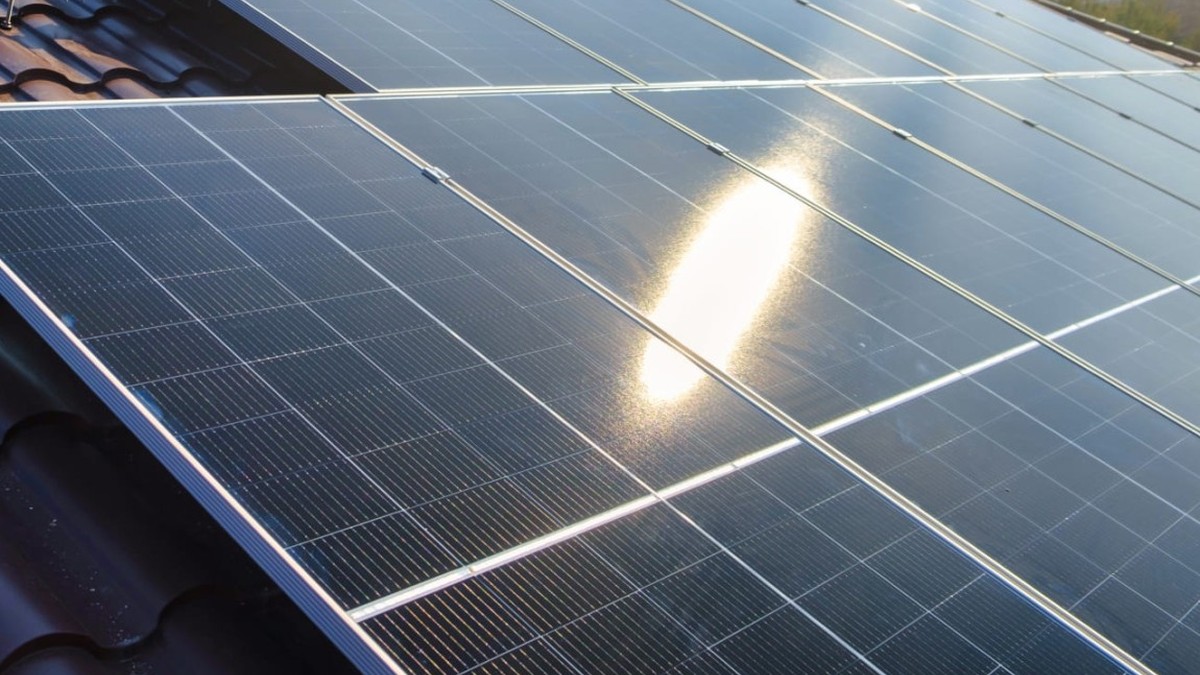
Solar power is part of the future, and it is quickly becoming a very important and popular part of our current reality. You have probably seen solar panels popping up in your neighborhood somewhere, or at least on the news or a similar medium. Why are solar panels great for your home? It’s because you can harness the free power of the sun.
Solar power can be a very affordable way to provide power and energy for your home. Not only is solar power very affordable, but it is also an extremely energy efficient form of energy. Solar power uses the sun’s rays to create energy for your home. There is no burning of unsustainable, valuable resources. Solar power doesn’t “use up” a resource; it simply converts the rays from the sun into power. So, no resources are wasted. On top of this, there are no harmful poisons emitted because of the burning of fuels.
Here is how a modern solar panel works:
Construction
Solar panels are black, grid-like constructions. The majority of solar panels are rigid; however, some solar panels are flexible by design. Each of the grid spaces are solar cells. Since all of the cells must be arranged in a circuit, this is how cells transfer energy. It is just one circuit transferring energy to a capacitor.
The energy produced by solar panels can either be produced to actively power a component, or it can be used to store power, which can then be used to power other objects. If it is actively powering your home, it will not work unless there is sunlight on the panels. On the other hand, solar panels that store energy can use their energy days later. In off-grid solutions, a battery array is preferred.
Efficiency
When you think of solar panels, you think of the unlimited amount of energy produced, as long as there is sun. But just how efficient are solar panels? That all depends on the manufacturer.
A solar panel that has an efficiency of 5 percent and produces 100 watts of power will be twice the size of a panel that produces 100 watts of power with a 10 percent efficiency. Your space available and power needs determine your requirement for efficient solar panels. The more efficient your solar panels, the less space that is used up on your house or land.
Why can’t solar panels use all of the energy provided by the sun? A significant portion of the energy is actually transmitted along different wavelengths. Infrared light and ultraviolet light, for example, cannot be used by solar panels currently; however, this may not be the case in the future.
Innovations
Solar panels work off of the sun’s energy, so placement decides the efficiency of the unit as a whole. After all, a solar panel does not produce energy without light, since it operates note photovoltaic process. However, there are ways to make the process more efficient, such as trackers.
Trackers are usually used on ground based models. They track the progress of the sun for maximum efficiency. By using a tracker, you increase the power the solar panel absorbs in a day.
Solar panels are growing more efficient. Currently, the highest efficiency is 20 percent. In the future, we may be utilizing panels that are illuminated by monochromatic light. This will increase the efficiency of solar panels by as much as 50 percent.
Summary
Solar panels are a great way to save the environment and save on your electric bill. As solar panels grow more efficient, more households will begin to make an investment in solar panel usage. You might be seeing more solar panels on your block in the future.
About the Author
The writer of this article, Nicole, has been writing about green energy for years, including how solar power works and more.
Seth W.